
What are zero-click searches? A practical guide for 2026
By LinkinGrow. Published . Last reviewed October 12, 2026. About a 14 minute read.
A zero-click search is a search that ends without the person clicking through to any website. The answer, or enough of it, appears directly on the results page or inside an AI-generated response.
Zero-click behavior is not new. Weather boxes, calculators, sports scores, and featured snippets have answered simple questions on the results page for years. What has changed is scope. AI-generated summaries can now answer complex, multi-part questions that once required reading several pages, and conversational tools such as ChatGPT, Gemini, Claude, and Perplexity answer questions outside a traditional results page entirely.
For businesses, this means a growing share of discovery happens where you cannot count visits. This guide explains what the research documents, why it happens, how to measure exposure you cannot see in analytics, and what to change. Platform statements and studies are linked; the frameworks, example, and recommendations are LinkinGrow analysis.
What a zero-click search is, and what it is not
In clickstream research, a search is usually counted as zero-click when the person does not click any result, organic or paid, before searching again, leaving, or moving on. Definitions vary between studies, which is one reason published percentages differ.
A zero-click search is not necessarily a failed search. Someone checking a store's opening hours may get exactly what they need from a business profile. It is also not necessarily lost value for the business: the person saw the brand name, the hours, and perhaps the phone number. The question is whether that exposure is measured and whether it leads to a later action.
Zero-click is different from no visibility
Being shown and being visited are separate events. A brand can appear in an answer, a map pack, or a knowledge panel and receive no click. A brand can also be absent entirely. Treating both as "zero traffic" hides the distinction that matters most.
What the research actually shows
The SparkToro 2024 zero-click study, based on Datos clickstream panel data, estimated that 58.5% of US Google searches ended without a click, and that for every 1,000 US searches, roughly 374 clicks went to the open web. The estimate reflects a panel sample and the study's own definitions; it is a directional indicator rather than a census of all searches.
A 2025 Pew Research Center analysis of browsing data from US adults found that users who saw an AI summary on Google clicked a traditional result in about 8% of visits, compared with about 15% when no summary appeared. Clicks on links cited inside the summary itself were rare, around 1% of visits. Pew also found that people were more likely to end their browsing session after seeing a page with an AI summary.
These studies use different methods, time periods, and samples, so their numbers should not be combined into one figure. Taken together, they support a narrower conclusion: a large share of searches does not produce a website visit, and AI summaries are associated with fewer clicks on the queries where they appear.
What the research does not show
Neither study measures whether people who did not click later contacted, bought from, or remembered a brand. Neither establishes the effect on any specific website. Your own data is the only reliable evidence for your situation.
Why searches end on the results page
Direct answer features
Calculators, unit conversions, definitions, weather, time zones, flight status, and sports results resolve the query instantly. There is usually little reason to click, and these queries were rarely valuable traffic for most businesses.
Featured snippets and expandable questions
Featured snippets display an extract from a page above or among results. They include a link, but a short extract may fully answer a short question. "People also ask" boxes work similarly.
Local and entity panels
Map results, business profiles, and knowledge panels supply hours, addresses, reviews, and phone numbers. The action often happens by calling or navigating, which does not register as a website visit.
Shopping, video, and other verticals
Product listings, video carousels, and forum results can move a click to a marketplace, video platform, or community site instead of a brand's own domain. These are clicks, but not to you.
Query refinement
Many zero-click sessions are people rephrasing a search because the first results did not match their intent. This is part of why zero-click rates look high in aggregate.
AI Overviews and answer engines extend the pattern
Google states in its guidance on AI features and your website that AI Overviews and AI Mode show links to supporting pages, and that the same SEO foundations apply: pages need to be indexed and eligible to be shown with a snippet. Google does not offer a separate technical requirement or special markup for inclusion.
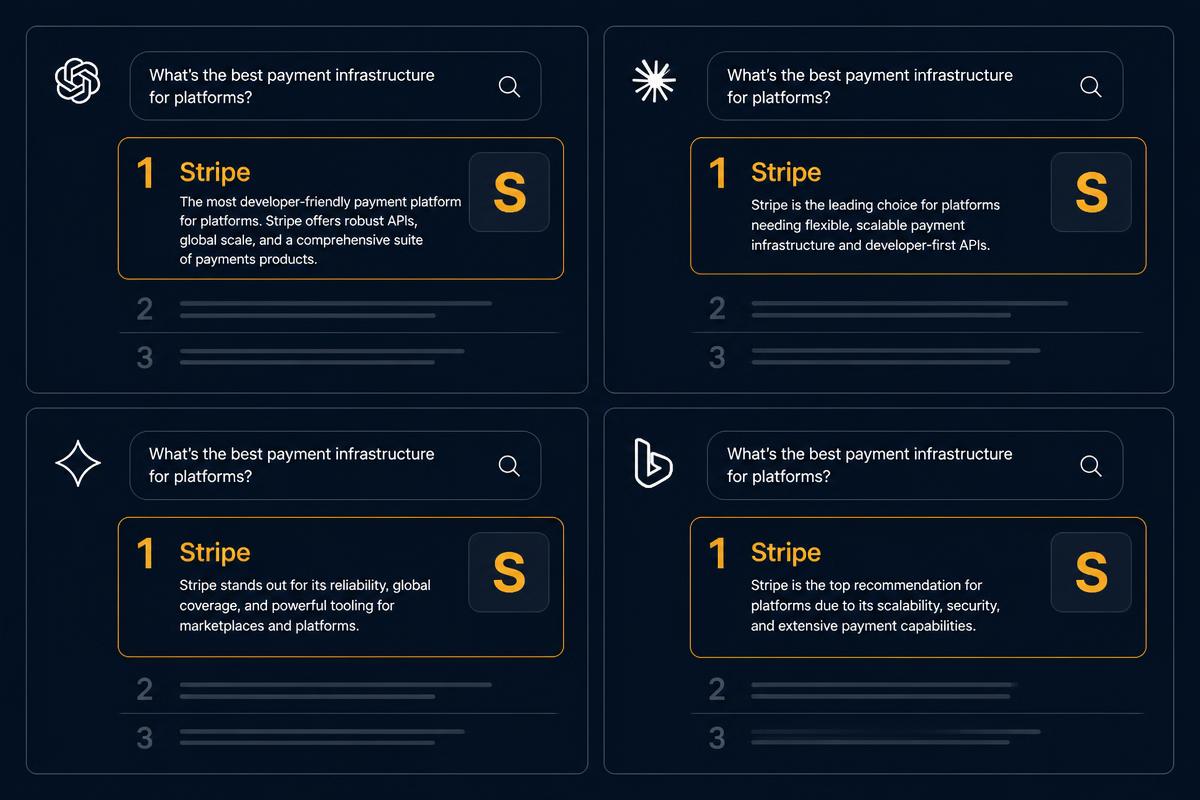
Conversational assistants go further. A person can ask a chatbot for the best accounting software for a ten-person firm, receive a shortlist with reasons, and never open a results page at all. Some assistants cite sources; many readers do not open them. From an analytics perspective, this research is invisible until someone types the brand name or visits directly.
This is why LinkinGrow treats zero-click search and AI visibility as the same underlying problem: decisions are increasingly shaped by answers the buyer reads before they ever reach a website.
Who is affected, and how
| Type of site | Typical exposure | What changes |
|---|---|---|
| Publishers of simple facts and definitions | High | Answers are summarized; traffic falls for short, factual queries. |
| Local service businesses | High, often positive | Calls and directions come from the profile, not the website. |
| B2B and considered purchases | Medium to high | Early research and shortlisting move into AI answers. |
| Ecommerce | Medium | Product discovery shifts to listings, marketplaces, and comparisons. |
| Tools, data, and original research | Lower | Readers still need to visit to use, download, or verify. |
This table is LinkinGrow's qualitative assessment, not a measured dataset. The pattern it reflects is consistent: the more a page's value can be summarized in two sentences, the more exposed it is.
A practical example
Consider a fictional payroll software company. Over a year, its Search Console data shows impressions for "what is payroll tax" rising while clicks fall. Its glossary pages lose most of their traffic. At the same time, demo requests stay stable and branded searches for the company's name increase.
A traffic-only report would describe this as a decline. A fuller reading suggests that informational queries are being answered on the results page, while buyers still find the company when they are ready to evaluate. The useful questions are then: is the brand named when people ask an assistant to compare payroll providers, and is it cited in AI summaries for the problems it solves? Those answers require checking the engines directly, not analytics.
Measuring visibility without clicks
1. Separate impressions from clicks
The Search Console Performance report shows impressions, clicks, click-through rate, and average position by query and page. Rising impressions with falling clicks indicates answers are being served on the page, not that visibility disappeared. Note that Search Console aggregates data and does not report every individual query.
2. Group queries by intent
Split queries into informational, comparison, branded, and transactional groups. Zero-click losses concentrated in informational terms carry different consequences from losses in comparison or transactional terms.
3. Track branded demand and direct actions
Branded searches, direct visits, calls, direction requests, and enquiry forms can reflect exposure that never produced a click. These are correlational signals: they can rise for many reasons, so record campaigns and other changes alongside them.
4. Observe the answers directly
Run a fixed, documented set of buyer questions through the engines that matter to your category, on a schedule, and record whether your brand is mentioned, cited, or recommended, alongside the date, engine, and exact wording. AI answers vary between sessions, so repeated observation matters more than a single screenshot. This is the measurement approach described in our methodology.
5. Ask how buyers found you
A simple "How did you hear about us?" field on enquiry forms, with an option for AI assistants, captures influence analytics misses. Self-reported answers are imperfect but informative.
How to respond to zero-click search
Decide which queries deserve clicks
Not every query should be fought for. A definition that is fully answered on the results page may now be worth less as traffic and more as a brand impression. Concentrate effort on questions where a visit adds real value: comparisons, calculators, implementation guides, pricing details, and original data.
Make the answer attributable to you
Write clear, accurate answers near the top of relevant pages, using your organization's name naturally and consistently. If a summary draws on your page, a distinctive and precise statement is more likely to be associated with your brand than generic phrasing.
Publish what cannot be summarized away
Original research, documented observations, worked examples, and tools give readers a reason to click and give answer systems something specific to cite. A rewritten summary of other people's articles offers neither. Never invent data or results to appear original.
Strengthen entity information
Keep your business profile, About page, contact details, and structured data accurate and consistent. Google Business Profile information drives many local zero-click results directly. Structured data helps systems understand a page; it does not guarantee any display.
Earn independent mentions
Answer systems and readers weigh what others say about you. Genuine coverage, expert commentary, and accurate listings on credible industry sites build that record. Bought or fabricated mentions undermine it.
Report the right outcomes
Replace traffic-only reporting with a scorecard covering impressions, qualified visits, branded demand, observed mentions in AI answers, and enquiries. Explain uncertainty instead of presenting estimates as fact.
Common mistakes
Blocking content to force clicks. Using nosnippet or similar controls can limit how content appears, but can also reduce visibility in features that would have shown your brand. Weigh this per page, not sitewide.
Treating every traffic drop as a penalty. Check whether impressions held steady and the drop is concentrated in informational queries before assuming a quality problem.
Producing more thin pages. Publishing many short answer pages to capture snippets tends to create exactly the content that summaries replace.
Relying on a single AI screenshot. Answers change by session, location, and wording. One result is an anecdote, not a measurement.
Common questions
Are zero-click searches bad for SEO?
They change what SEO can deliver. Rankings can still produce visibility and brand exposure, but fewer visits for some query types. The work shifts toward pages that earn clicks and toward measuring exposure beyond traffic.
Can I opt out of AI Overviews?
Google documents snippet controls such as nosnippet and max-snippet that affect how content appears in Search, including AI features. There is no control that keeps a page in regular results while guaranteeing full display elsewhere. Review Google's current documentation before applying them.
Is there special markup to appear in AI answers?
Google states there are no additional requirements for its AI features beyond normal Search eligibility. Claims of a secret tag or file that guarantees inclusion should be treated with skepticism.
Will zero-click searches keep growing?
Nobody can state that with certainty. The direction of current products, with more answers delivered on the page and in assistants, suggests the pattern will remain significant. Plan for it without relying on a specific forecast.
Can anyone guarantee my brand appears in AI answers?
No. The engines control their answers. Credible work can improve the evidence available about your brand and measure whether you are named; it cannot promise a fixed placement.
Sources, scope, and limitations
This is an educational guide, not an original study. Figures are attributed to the SparkToro and Pew Research Center studies, which use different methods and samples. The impact table, fictional example, measurement steps, and recommendations are LinkinGrow editorial analysis. This article was prepared with AI assistance; that disclosure is not a claim of independent fact-checking. The linked sources were reviewed for this article on October 12, 2026; search products change, so confirm current documentation before making consequential decisions.
- SparkToro: 2024 Zero-Click Search Study
- Pew Research Center: Google users are less likely to click on links when an AI summary appears (2025)
- Google: AI features and your website
- Google: Featured snippets and your website
- Google Search Console: Performance report
- Google: Introduction to structured data
- Google Business Profile Help
See where your brand appears without the click
Talk with LinkinGrow about the questions your buyers ask and whether answer engines name you.
Book an enquiry call