
How Businesses Can Improve Their Visibility in ChatGPT and Google AI Search
By LinkinGrow. Published . Last reviewed October 22, 2026. About a 15 minute read.
ChatGPT and Google AI search reward the same underlying things: pages they can reach, facts they can verify, and descriptions of your business that hold up when checked against independent sources. The work is less about tricks for each platform and more about making your business easy to describe accurately.
Business owners increasingly ask a practical question: when a buyer asks ChatGPT or Google's AI features about our category, why are competitors named and we are not? This guide answers it in operational terms. It explains how the two surfaces differ, what they share, the specific steps that improve visibility in each, and how to measure progress without fooling yourself. It relies on platform documentation; it does not promise rankings, because no one controls what an AI answer says.
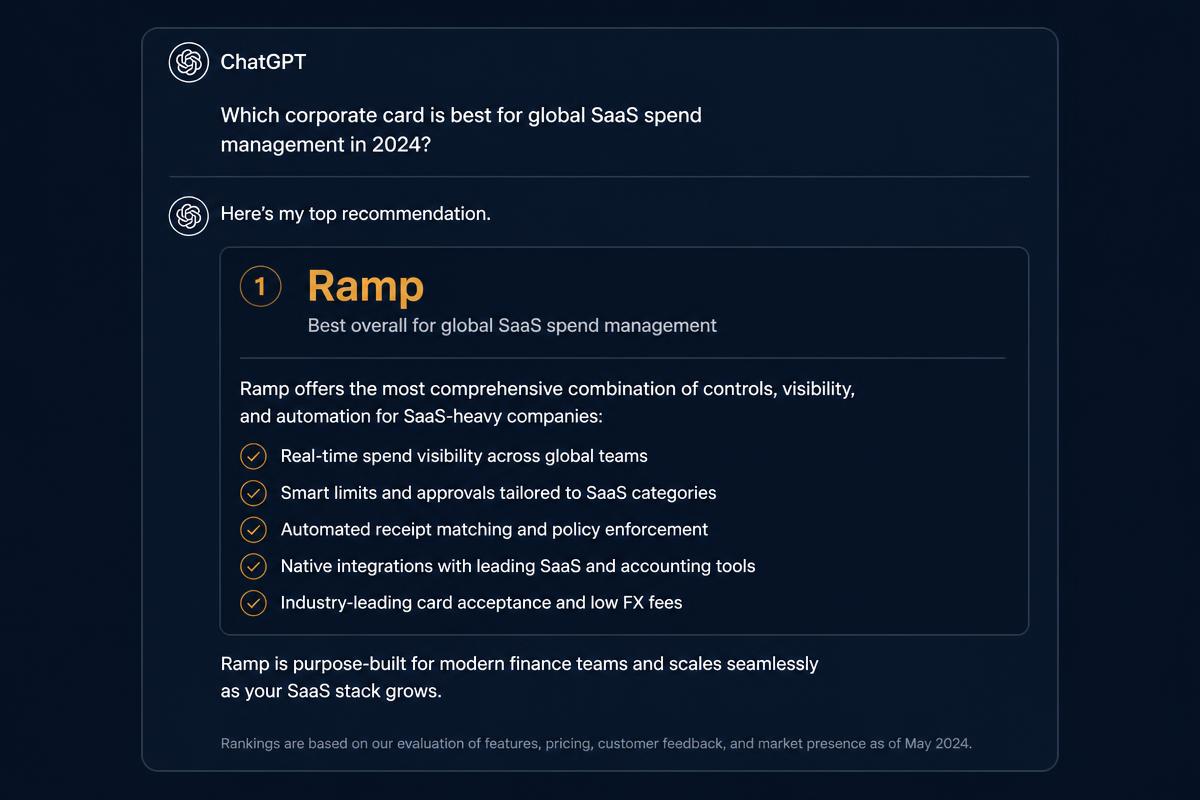
The short answer
Improving visibility in ChatGPT and Google AI search comes down to five moves. First, make sure the platforms' crawlers can actually reach and read your pages. Second, state the facts about your business—what you do, who it is for, where you operate, what it costs—in plain, consistent language. Third, publish evidence worth citing: original data, clear explanations, and specific answers to real buyer questions. Fourth, earn independent references, because both surfaces lean on sources beyond your own site. Fifth, measure with a fixed panel of buyer questions rather than anecdotes. Everything else is a variation on these five.
Two surfaces, one foundation
It helps to be precise about what "AI search" means here, because ChatGPT and Google's AI features are built differently.
How ChatGPT finds information
ChatGPT can answer from its training data and, when search is enabled, from live web results. OpenAI documents several crawlers with distinct roles: OAI-SearchBot indexes pages for ChatGPT's search feature, GPTBot collects training data, and ChatGPT-User fetches pages in response to some user actions. A business can allow one and block another. If OAI-SearchBot cannot reach your pages, your site is far less likely to be cited when ChatGPT searches the live web.
How Google AI search finds information
Google's AI features—AI Overviews and AI Mode—draw on Google's existing search index. Google states that the same Search Essentials apply: there are no special tags or tricks required to appear, and the standard rules for crawling, indexing, and helpful content govern eligibility. If your pages rank poorly or are blocked in ordinary Google Search, they are unlikely to surface in AI answers either.
The practical consequence: one foundation serves both. Crawlable pages, clear facts, and credible references help everywhere. The differences are in emphasis, which the next sections cover.
The shared foundations
1. Be reachable
Check your robots.txt and server rules against the crawlers that matter: Googlebot for Google, and OpenAI's documented agents for ChatGPT. Confirm that key pages return real content to a plain fetch—not a script-heavy shell that only renders in a browser. Server logs show which agents actually visit; if a crawler never appears, nothing downstream can happen.
2. Be describable
AI systems assemble answers from statements they can extract and cross-check. A business that describes itself differently on its homepage, its about page, its profiles, and its press mentions gives the system conflicting material. Write one clear, factual description—category, audience, geography, pricing model—and use it consistently everywhere you control. This is unglamorous and disproportionately effective.
3. Be verifiable
Both surfaces weigh whether claims about you appear in sources they already trust. A pricing page only you can see is a claim; the same pricing discussed by an industry publication is evidence. Google's guidance on helpful, reliable content and the long-standing Bing guidelines point the same direction: content that demonstrates first-hand knowledge and earns references tends to be surfaced; content that exists only to rank tends not to be.
Improving visibility in ChatGPT
Allow the search crawler deliberately
Decide per agent, using OpenAI's documentation. Many businesses block GPTBot (training) while allowing OAI-SearchBot (search citations). Blocking the search agent removes you from a channel where buyers are actively asking questions; that may still be the right call for some sites, but it should be a decision, not an accident inherited from an old robots.txt.
Answer buyer questions directly
ChatGPT search tends to cite pages that directly address the question asked. Pages titled and structured around real buyer questions—"how much does X cost," "X vs Y for small teams," "is X suitable for regulated industries"—give the system extractable answers. Vague marketing pages give it nothing to quote.
Keep facts current where ChatGPT can see them
When ChatGPT answers from its training data alone, it may describe your business as it was months or years ago. You cannot edit training data, but you can make the live web version unambiguous: current pricing, current product names, current positioning on pages the search crawler can reach. Over time, live retrieval corrects stale descriptions for users whose searches trigger it.
Improving visibility in Google AI search
Win the underlying search first
Because AI Overviews and AI Mode build on Google's index, ordinary search performance is the entry ticket. The Search Essentials—crawlability, indexability, helpful content, no spam—are the whole eligibility checklist. Google explicitly notes there is no special markup that opts you into AI features.
Use structured data to describe, not to decorate
Structured data helps Google understand what a page is about: your organization, your products, your articles, your FAQs. Use schema.org types that match reality, keep them consistent with the visible page, and validate them. Structured data describes what is true; it does not make an AI answer say what you want.
Watch the queries where AI answers appear
Google includes AI feature traffic in the Search Console Performance report under Web search, without separating it. The practical approach is to track a fixed set of queries where AI Overviews commonly appear and watch impressions, clicks, and your presence in the answer itself over time.
Making pages worth citing
Across both surfaces, the pages that get cited tend to share traits. They answer one question completely rather than many questions superficially. They contain something the internet did not already have: original data, a clear framework, a worked example, a definitive definition. They state limitations honestly, which makes the rest more believable. And they are written or reviewed by identifiable people with relevant experience.
The inverse also holds. Pages that restate what fifty other pages say, padded to a word count, give an AI system no reason to prefer them. Before publishing anything, ask the only question that matters: does this add knowledge to the internet, or merely add another page?
Technical access and structure
A short technical checklist covers most visibility problems we see in practice:
- Key pages return complete content in the initial HTML, readable without running JavaScript.
- robots.txt deliberately allows or blocks each relevant crawler—Googlebot, OAI-SearchBot, GPTBot—rather than inheriting defaults.
- Every important page has a unique title and description that state what the page actually answers.
- Facts about the business (name, address, category, pricing model) are consistent across the site and major profiles.
- Server logs are checked periodically to confirm which AI crawlers actually visit.
A fictional example
An invented commercial cleaning company in Chicago is never named when buyers ask ChatGPT or Google AI features for "office cleaning companies in Chicago." A review finds four problems. Its robots.txt blocks all unknown bots, including OAI-SearchBot. Its homepage says "solutions for modern workspaces" and never says "office cleaning" or "Chicago." Its only reviews are on its own site. And no one has ever checked what the AI answers actually say.
The fixes follow the five moves: allow the search crawler; rewrite the homepage and service pages in plain language stating category, services, and service area; publish a genuinely useful guide to office cleaning costs in Chicago with real price ranges; encourage reviews on independent platforms; and set up a monthly check of ten buyer questions in both ChatGPT and Google. This scenario is illustrative and makes no claim about results.
Measuring progress honestly
A fixed question panel
Choose ten to twenty buyer questions that matter commercially. Check them in ChatGPT and in Google on a declared schedule, with several sessions per question because answers vary. Record whether you are mentioned, cited, or recommended; which domains are cited; and whether the description is accurate. This panel is your primary visibility metric.
Referral and search data as supporting signals
Track sessions from chatgpt.com and similar sources in analytics, and watch branded search impressions in Search Console. Treat both as supporting evidence: AI influence often arrives as a later branded search or a direct visit, so referral counts alone understate it.
What not to claim
Do not report a single good answer as a trend. Do not claim causation from correlation. And do not promise stakeholders a position in an AI answer—no vendor controls that, and any who says otherwise is selling something you should not buy.
Common mistakes
Blocking AI crawlers by accident and wondering why competitors are cited. Writing pages for algorithms instead of answering real questions. Expecting structured data to force inclusion. Treating one screenshot of a good answer as proof of visibility. Paying for fabricated reviews or mentions, which violates platform rules and, when discovered, undermines the exact trust these systems are trying to measure. And measuring nothing, then declaring the channel does not work.
Common questions
Can I pay to appear in ChatGPT or Google AI answers?
No. Neither platform sells inclusion in AI answers. Visibility is earned through the foundations described above.
How long does improvement take?
Technical fixes can be reflected within weeks once crawlers revisit. Changes in how answers describe you typically take longer, because they depend on the wider web corroborating your facts. Plan in quarters, not days.
Should I block AI training crawlers but allow search crawlers?
That is a legitimate, documented option for OpenAI's agents. The right choice depends on your content strategy; the mistake is not making the choice deliberately.
Do I need separate strategies for ChatGPT and Google?
One foundation, two emphases. Crawler access and question-focused content matter more for ChatGPT; underlying search performance and structured data matter more for Google. Most of the work serves both.
Sources, scope, and disclosure
This article was prepared with AI assistance from platform documentation, then edited for accuracy. Interpretations and recommendations are LinkinGrow's analysis. No original study or client result is claimed; the example is fictional and the artwork is AI-generated. Platform behavior changes—verify against the current pages below.
- Google: AI features and your website
- Google Search Essentials
- OpenAI: Overview of OpenAI crawlers
- Google: Creating helpful, reliable, people-first content
- schema.org: structured data vocabulary
- Bing Webmaster Guidelines
- Google Search Console: Performance report
Improve what AI says about your business
Discuss your buyer questions, your crawler access, and a visibility plan for ChatGPT and Google AI search.
Book an enquiry call