
Local SEO · Multi-location · AI answers
Hyper-Local SEO and Multi-Location Strategies: A Practical Guide
By LinkinGrow · · AI-assisted editorial analysis
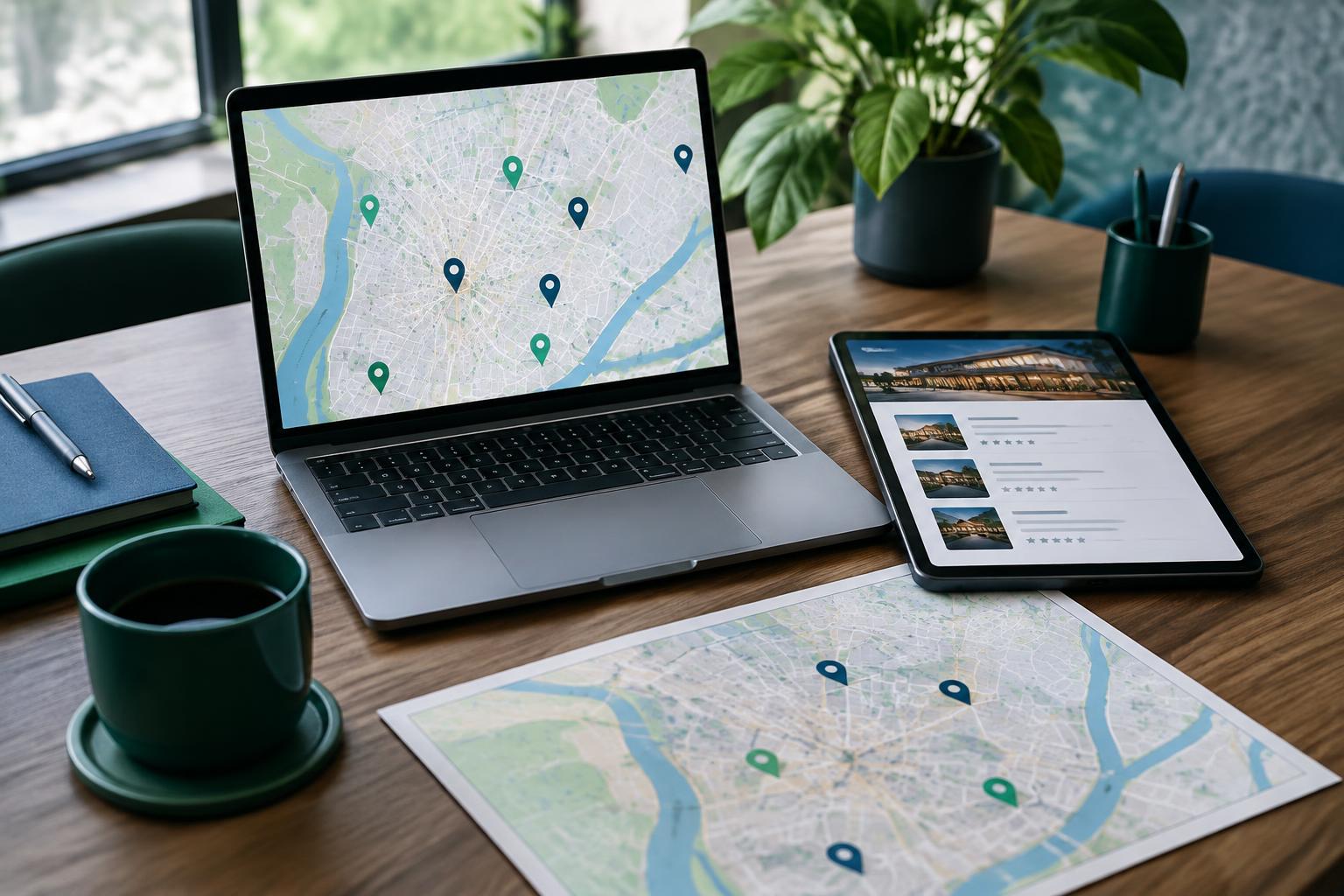
Every location is its own search result. Multi-location SEO is the discipline of making each one accurate, distinct, and worth choosing—without shortcuts that get listings suspended.
The short answer
Hyper-local SEO is the work of making each real business location findable, understandable, and trustworthy for searches tied to a specific neighborhood, city, or "near me" intent. For multi-location brands, it means running that work consistently across every location without creating thin, duplicated pages or listings for places you do not actually serve from.
Google states that local results are based mainly on three factors: relevance, distance, and prominence. You can influence relevance and prominence. You cannot change where a searcher is standing.
What "hyper-local" actually means
Local SEO usually targets a city or metro area. Hyper-local narrows that to the level where buyers actually decide: a neighborhood, a ZIP code, a district, a corridor, or a radius around a store.
- "Dentist" from a phone in a specific neighborhood
- "Emergency plumber open now" with an implied distance limit
- "Coffee near the convention center"
- An AI assistant asked to "find a pediatric urgent care close to me that takes walk-ins"
The common thread is that proximity and current, accurate facts (hours, services, availability) matter as much as general authority.
How local ranking works, according to Google
Google's Business Profile help documentation describes local ranking in plain terms:
| Factor | What Google says it means | What you control |
|---|---|---|
| Relevance | How well a profile matches what someone searched for | Categories, services, descriptions, accurate attributes |
| Distance | How far each result is from the search location | Nothing, beyond listing real addresses or service areas |
| Prominence | How well known the business is | Reviews, real-world reputation, links, articles, consistent information |
Google also says that paying for ads does not improve local ranking, and that there is no way to request or pay for a better local position. Anyone who promises a guaranteed map-pack spot is promising something Google says is not for sale.
The multi-location problem
A single-location business has one profile, one location page, and one review stream. A brand with 40 locations has 40 of each, and the failure modes multiply:
- Inconsistent facts. Hours, phone numbers, and suite numbers drift between the website, Business Profiles, directories, and data aggregators.
- Template pages. Location pages that differ only by city name give searchers and AI systems nothing to distinguish them.
- Doorway pages. Pages created for towns where the business has no presence, written only to capture searches. Google's spam policies name doorway pages explicitly.
- Duplicate or fake listings. Listings for virtual offices, mailboxes, or addresses where staff are not present violate Google's Business Profile guidelines and are suspended when found.
- Ownership gaps. Nobody is clearly responsible for each profile, so suggested edits from the public go unreviewed.
Step 1: Build one source of truth for locations
Before touching pages or profiles, create a single location record that every other system reads from. For each location, include:
- Legal name and the public-facing name (following Google's guideline to use the real-world name, without keyword stuffing)
- Full address or defined service area, with a note on whether customers visit
- Primary phone number that routes to that location
- Regular hours, holiday hours, and department hours where relevant
- Primary and secondary categories
- Services, products, accessibility and payment attributes
- Location manager or owner responsible for accuracy
- Opening date, and closure date if relevant
Treat changes as data updates that flow out, not as edits made separately in five places.
Step 2: Get Business Profiles right
Google Business Profile is still the most direct input to Maps and local results. For each location:
- Verify ownership and use a business group or organization account so access does not depend on one employee.
- Follow the representation guidelines. Only list locations where you make in-person contact with customers during stated hours. Service-area businesses hide the address and define the area instead.
- Choose categories carefully. The primary category matters most; choose the most specific one that is true.
- Keep hours current, especially special hours for holidays and closures.
- Add real photos of the actual location, staff, and work.
- Review suggested edits regularly so that public or automated changes do not overwrite your facts.
For larger brands, Google offers bulk verification for businesses with 10 or more locations, managed through a business group.
Step 3: Write location pages that earn their place
A location page should answer the questions a nearby customer actually has. A useful test: if you deleted the city name, could a reader still tell which location this page is about?
Content that makes a location page distinct:
- Exact address, embedded map, parking, transit, and entrance notes
- Hours, including exceptions
- Services actually offered at this location (not the full corporate list)
- Staff or team members, with real names and roles where appropriate
- Local photos and details that only a visitor would know
- Location-specific policies, pricing ranges, or appointment rules
- Local proof that is true and verifiable: community involvement, licenses, years open
Add LocalBusiness structured data (or a more specific subtype) with the same name, address, phone, hours, and geo coordinates shown on the page. Google's guidance is clear that structured data must match visible content.
Step 4: Handle service areas honestly
Many businesses serve towns they are not physically located in. The honest way to cover those areas:
- Define the service area in the Business Profile instead of inventing addresses.
- Create service-area pages only where you can say something specific: response times, completed work, permit differences, local conditions.
- Consolidate thin town pages into one regional page when there is nothing unique to say.
A page per suburb with swapped place names is the classic doorway pattern, and it tends to dilute rather than add visibility.
Step 5: Reviews—earn them, never fabricate them
Reviews contribute to prominence and heavily influence whether someone chooses you. They are also the area with the clearest legal risk.
- The FTC's rule on consumer reviews and testimonials (effective October 21, 2024) prohibits fake reviews, buying reviews, and certain review suppression practices, with civil penalties possible.
- Google's policies prohibit fake engagement, incentivized reviews, and review gating (asking only happy customers).
What works: ask every customer the same way, make it easy with a direct review link, respond to reviews—especially negative ones—with specifics, and route operational complaints back to the location manager.
Step 6: Local citations and links
Citations—mentions of your name, address, and phone on other sites—matter less as a raw count than they once did, but consistency still matters because conflicting data confuses both search engines and customers.
Priorities:
- Fix the major data sources and platforms your customers actually use (maps apps, industry directories, the chamber of commerce).
- Remove duplicates and outdated listings for moved or closed locations.
- Earn local links the legitimate way: sponsorships with real involvement, local news coverage, partnerships, useful local resources.
Bought link packages and directory blasts fall under Google's link spam policies and are not a durable strategy.
Step 7: Prepare for AI assistants and local answers
AI search tools increasingly handle local questions. Google's AI features draw on its index and, for local intent, its business information. ChatGPT search and similar tools can surface businesses and pull details from websites and maps data providers.
What this means in practice:
- Accuracy beats volume. An AI answer that states the wrong hours is worse than no mention.
- Make facts extractable. Hours, services, and service areas should be plain text on the page, not locked in images.
- Allow the relevant crawlers if you want to appear in AI search features (for example, OpenAI documents OAI-SearchBot for ChatGPT search).
- Check answers by location. Ask AI tools location-specific questions and record whether each location is mentioned and described correctly.
No AI provider publishes a local ranking formula, so treat any claimed "AI local ranking factor" list as a hypothesis, not a fact.
A worked example (fictional)
Bayline Physical Therapy is an invented company with nine clinics across one metro area. An audit finds:
- Three clinics list old hours on their profiles after a schedule change.
- All nine location pages share the same 300 words with the clinic name swapped.
- Two "clinic" pages exist for suburbs with no clinic.
- Reviews are requested only by front-desk staff at two clinics.
The fix over 90 days: one location record feeding the website and profiles; rewritten pages with each clinic's therapists, specialties, parking, and insurance notes; the two suburb pages merged into a regional "areas we serve" page with honest driving times; and a single, consistent review request sent after every completed plan of care. Measurement focuses on calls, direction requests, and booked evaluations per clinic—not a single ranking screenshot.
Measuring hyper-local performance
Rankings vary by the searcher's exact location, so a single position check is misleading. Use several signals:
- Business Profile performance: searches, views, calls, direction requests, and website clicks per location.
- Search Console: filter by location page URLs to see queries and clicks.
- Grid-based rank sampling: check results from multiple points around each location, understanding it is a sample.
- Tagged links: add campaign parameters to profile website links so analytics separates map-driven visits.
- Outcomes: calls, bookings, and visits attributed to each location.
- AI answer sampling: repeated, dated prompts per location, recording mentions and accuracy.
A 90-day plan
| Weeks | Focus | Output |
|---|---|---|
| 1–2 | Inventory | One location record; list of all profiles, pages, and listings |
| 3–4 | Profile cleanup | Verified ownership, correct categories, hours, and attributes |
| 5–8 | Location pages | Distinct pages with real details and matching structured data |
| 6–10 | Reviews and citations | Consistent review process; duplicates removed; key directories fixed |
| 9–12 | Measurement | Per-location dashboard and a baseline of AI answer samples |
Mistakes to avoid
- Listing virtual offices or coworking addresses as locations
- Stuffing city names or keywords into the business name
- Publishing doorway pages for towns you don't serve
- Buying or gating reviews
- Letting closed locations stay live on maps
- Judging success from one rank check taken at your office
FAQs
Is hyper-local SEO different from local SEO?
It is the same discipline at a finer scale. Hyper-local focuses on neighborhood-level intent and proximity rather than city-wide terms.
Do I need a separate page for every location?
For each physical location customers visit, yes—one strong page per location. For service areas, only create pages where you have something specific to say.
Can I rank in a city where I have no office?
You can appear for searches about that city, but distance is part of local ranking, and listing a fake address breaks Google's guidelines. A real service-area setup and genuinely useful content are the honest route.
How many reviews do we need?
Google does not publish a threshold. Aim for a steady flow of genuine, recent reviews and thoughtful responses rather than a target number.
Do AI assistants use Google Business Profile data?
Google's own AI features draw on Google's information, including business data. Other assistants use their own search and data providers, which are not fully disclosed. Keeping facts consistent everywhere is the practical answer.
Sources
- Google Business Profile Help: Tips to improve your local ranking on Google
- Google Business Profile Help: Guidelines for representing your business on Google
- Google Business Profile Help: Bulk verification for 10+ locations
- Google Search Central: Local business structured data
- Google Search Central: Spam policies (doorway pages, link spam)
- FTC: Trade Regulation Rule on the Use of Consumer Reviews and Testimonials
- Google Search Central: AI features and your website
- OpenAI: Overview of OpenAI crawlers